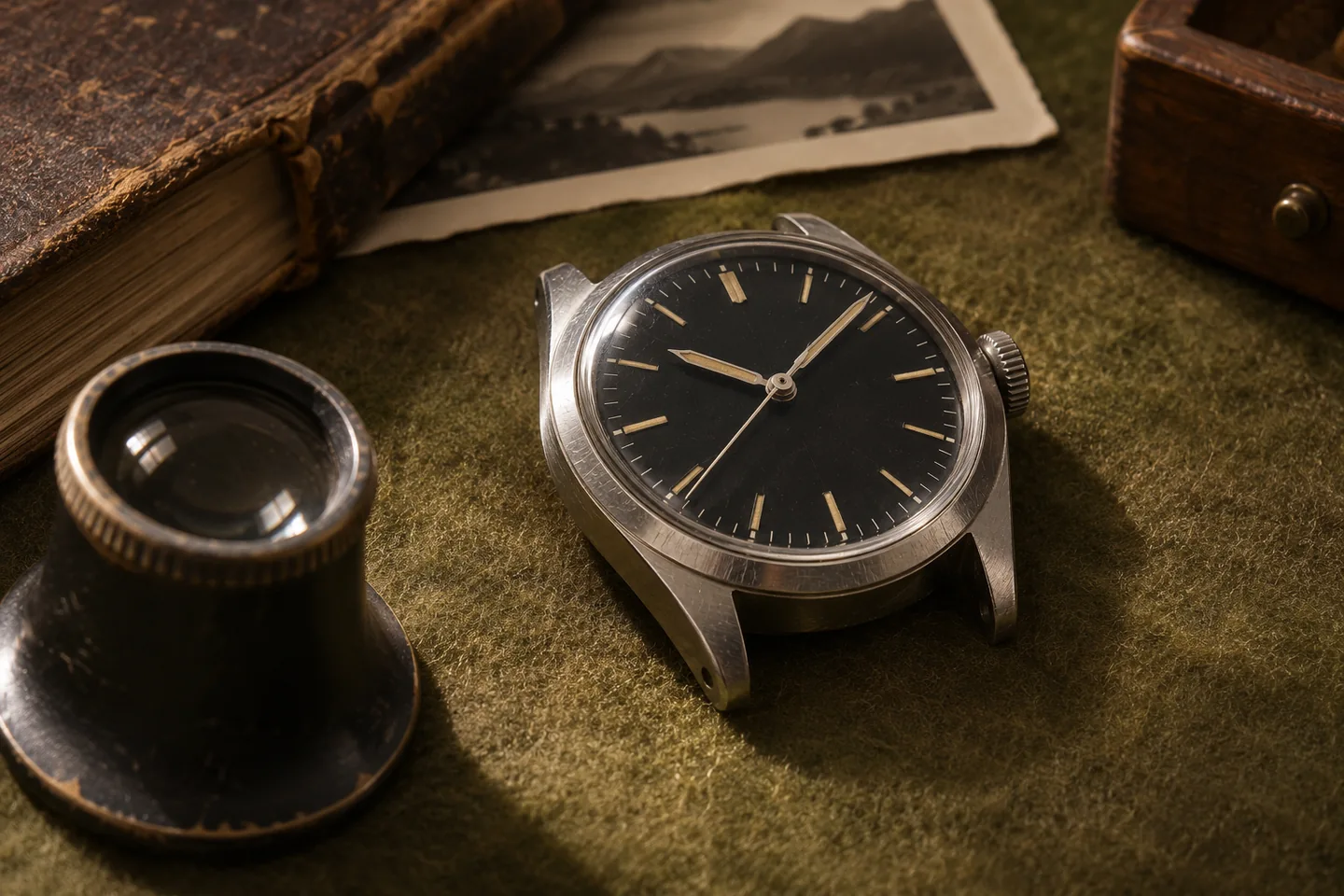

Your first automatic teaches you something a specification sheet rarely explains. The watch becomes part of your routine. It may stop if you wear it infrequently. Rotate several pieces and you will reset it regularly. Wear it daily and you will grow familiar with its movement and the way the clasp sits. Try those gestures before choosing.
Start with your week
Think about what you wear to work, when you remove your watch and how often you want to reset it. A simple calendar is useful if you check the date frequently. A dial without a date spares you that adjustment. If you wear the watch intermittently, a good reserve makes rotation easier, provided the spring had enough energy when you put it down.
On the wrist, look at the space between the lugs and the edges of your wrist. Close the bracelet, bend your wrist and lower your arm. Notice where the case sits. Try reading the time in shade. You will do these things far more often than you will admire the watch in an enlarged photograph.
Learn the controls before using them
Identify the crown positions and consult the manual for the reference. If the crown screws down, learn how to release and close it. If the calibre accepts manual winding, follow the instructions when it has stopped. If there is a quick-set date, check the hours during which the manufacturer advises against using it.
During the first week, note whether the watch stopped and how far it drifted from a time reference. Measure at the same time each day without resetting it. A consistent deviation gives you something to compare with the specification. If it varies widely or the watch stops despite adequate winding, keep your notes for an assessment.
Make room for fitting and maintenance
Confirm usable bracelet length and the included links. On a pre-owned piece, ask what is known about service and leave room in the budget for an initial adjustment or inspection. If you intend to expose it to water, check the manufacturer’s guidance and current water resistance first.
A good first automatic is one you want to wear and can maintain. Once you have chosen it, “What happens inside the case” goes deeper into winding, reserve and rate.
Back to Journal