A calibre is a construction built around one problem. It has to turn the changing energy of a spring into steps regular enough to move the hands. A view through the caseback is a chance to understand how its parts work together.
Follow the energy
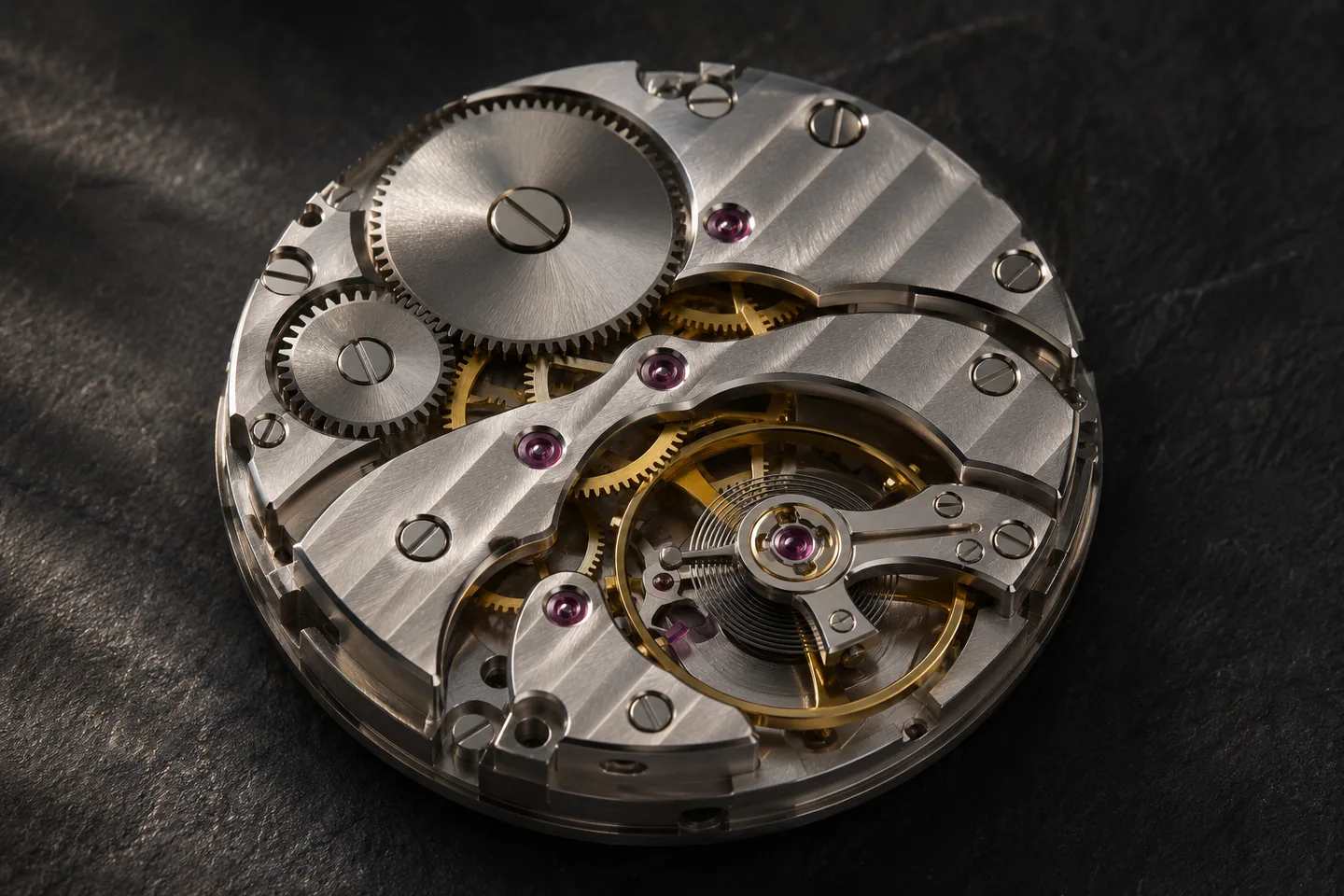
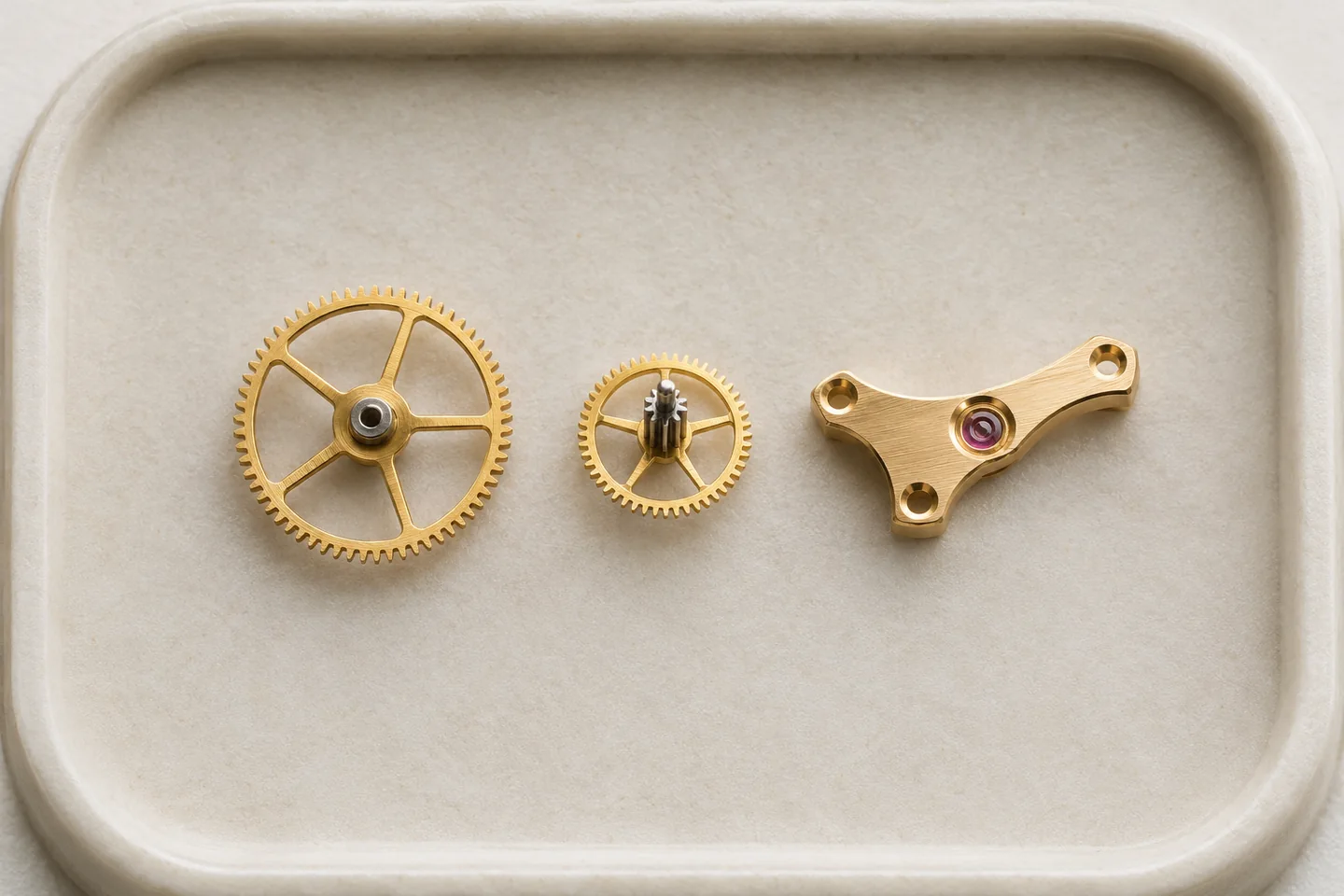
The mainspring sits in the barrel. As it unwinds, it powers a train of wheels that carries energy to the escapement. The escapement holds and releases the train in steps and returns a small impulse to the balance. The hairspring helps bring the balance back and the oscillations repeat. Their rhythm allows the movement to indicate the time.
An automatic rotor contributes to winding through a transmission system. That is why reserve depends on how much energy entered before you took the watch off. Rotor and winding systems vary by calibre. A hand-wound movement can arrange its bridges differently because it dispenses with the automatic assembly.
Put the figures in context
Frequency can be expressed in hertz or vibrations per hour. At 4 Hz, for example, the balance completes four full oscillations a second. Each has two half oscillations, which makes 28,800 per hour. This figure describes the rate of the regulating organ. Actual timekeeping also depends on how the calibre was built, adjusted, maintained and worn.
Synthetic jewels can support pivots and reduce wear at contact points. Jewel count alone tells you very little about the condition of a particular example. For a buyer, the calibre, functions, service availability and verified condition of the actual watch matter more.
What the caseback shows
A display back lets you identify the rotor, watch the balance move and compare visible finishing with the documentation. Internal wear, contamination and lubrication are matters for a workshop. If reserve has fallen or the rate has changed abruptly, notes on actual wear can help more than an enlarged picture.
Once you can follow the energy from spring to balance, reserve and timekeeping make more sense together. “What happens inside the case” shows how to observe that behaviour over a week of wear.
Back to Journal